Posts

Showing posts from June, 2020

ARE Prep: Using Cognitive Skills to Improve Learning

In architecture, as well as just about any profession, there is a great deal of information to process, understand, and retain. The range varies from highly technical processes to subjective theories, to common-sense communications. With so many different forms of knowledge to process, understand, and retain, it becomes challenging to just rely on simple memorization.  Over the course of my career, I have developed cognitive skills to help me develop understanding and to retain and communicate the knowledge that I have gained. Specifically, these skills are based on making connections between things I encounter in the profession and everyday life. I have found if I do that, I can improve my ability to retain knowledge and, perhaps more importantly, recall that knowledge when I need it.  As a physical example, let's take the rather technical concept of resolving for reactions at supports of beams that are carrying a known load. This involves the calculations needed to ...

Qualitative versus Quantitative Risk Analysis: Topics to Learn for the Project Management Professional (PMP) Exam

Managing risk is a crucial aspect of managing projects. It is wise to anticipate multiple questions on the exam about project risk management and the processes from the risk knowledge area within A Guide to the Project Management Body of Knowledge (PMBOK Guide) . Two of those processes that are commonly confused are Perform Qualitative Risk Analysis and Perform Quantitative Risk Analysis . For exam success, it is vital to understand the differences between these two processes.  Project risk management involves: Planning the approach to risk management for the project  Identifying the risks to the project, including both negative risks (threats) and positive risks (opportunities)  Analyzing the identified risks, qualitatively and perhaps quantitatively  Planning and implementing the risk responses  Monitoring risk throughout the project  Table of Contents 1. Perform Qualitative Risk A...

Estimating Techniques: Topics to Learn for the Project Management Professional (PMP) Exam

As a project manager, you are most likely responsible for estimating the duration of the project activities and the costs for the project. As part of the PMP exam, you will be tested on the various estimating techniques. This requires that you have a strong understanding of the differences between the techniques and even possibly calculating some estimates based on the data provided.  There are four techniques used for both cost and duration estimating: analogous, parametric, three-point, and bottom-up.  Table of Contents 1. Analogous Estimating 2. Parametric Estimating 3. Three-Point Estimating 4. Bottom-Up Estimate Analogous Estimating  Analogous estimating is used when there is very little detailed information about the current project, so we leverage a similar, past project as the basis for the estimate. Think of analogous as an analogy: we are comparing two similar items. Becaus...

Design Development Phase, Achieving Design Continuity

This is the third article in a series on "A Day in the Life of an Architect," this time focused on the design development phase and how to improve design continuity. To some, if not many, the design development phase of an architectural project might be a bit of a "lost phase."  These days, there seems to be a rather accelerated project progression from schematic design to construction documents without taking the time to improve design continuity or to determine what elements of a project need further development.  Like many processes with the advent of technology, some traditional practices are fading away while being regarded as unnecessary. With the many software options used today in architectural practice, design concepts can almost automatically be converted into something that nearly represents a completed set of construction document details. This phenomenon has contributed to the diminishment (if not elimination) of the design development phase.  ...

Schematic Design Phase, Getting to Closure

Image
Obtaining an education in architecture is certainly a broad and challenging experience. As students, we are immersed in all things related to architecture. We learn about art and architectural history, we study design and engineering, and we are enlightened by many courses intended to develop our capacity to be creative. While all of this may provide a great foundation to build a career in architecture, if you are like me, you'll discover that there is so much more to learn as you practice in the profession.  That brings me around to this second article in a series on "A Day in the Life of an Architect," this time focused on the Schematic Design Phase and how you reach closure with a client. In my experience, one of the biggest barriers to project profitability often occurs in the Schematic Design Phase, and that is an inability to reach closure or obtain well-informed approvals by the client. It turns out that it is not just about the strength of a specific des...

General Area of Professional Practice (ARE): Pre-Design

Image
Topic: Day in the life of an Architect - During the Programming Phase  Recently, I was asked to consider what a typical day is like for an architect. As I thought about this, I quickly concluded that really, no two days are the same. It is constantly changing. This constant change has made for a very interesting and challenging career for me personally, and I have to say, that the time seems to fly by when each day brings new problems, analysis, and solutions.  As I thought more about how to describe a typical day for an architect, I decided that perhaps the best way to proceed is to progress through the different phases of a project. So, this first view of "a day in the life of an architect" is through the lens of the Programming Phase (or Pre-Design).  First, what is programming as it relates to the practice of architecture? Early-on in my career, I learned to think of architectural programming as the phase when an architectural problem gets defined. ...

Four Keys to Project Management Career Growth

Image
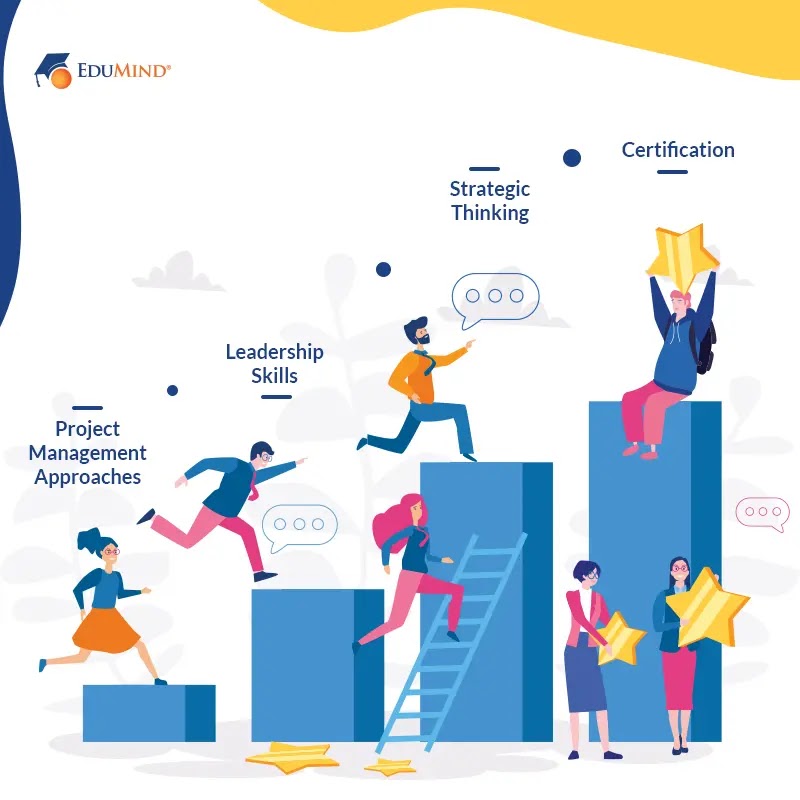
There is a continually increasing demand for skilled project managers across all industries. Senior project managers are not only at the forefront of driving change for their organizations, but their position typically involves a substantial salary base. There are four keys to successful career growth and development within the project management field of expertise:  Table of Contents 1. Project Management Approaches 2. Leadership Skills 3. Strategic Thinking 4. Certification Project Management Approaches There is not a one-size-fits-all approach to project management. As the project manager, you will need to have a strong understanding of the project constraints, environmental considerations, and product development options to select the best approach when working on a project. Traditional or plan-driven approaches are appropriate when the work is well-defined: plan the work and work the ...

Cost of Quality: Topics to Learn for the Project Management Professional (PMP) Exam

Project success is determined, in part, by the quality of the product being produced as well as the quality of the project itself. The quality of the product is determined by how well the product, service, or project outcome meets the stakeholders' needs and expectations. The quality of the project is determined by the ability to deliver the project within the defined constraints of schedule and cost, while also providing the intended value to the organization.  Project quality management involves managing, estimating, and controlling the costs associated with product quality. The cost of quality can be categorized as the cost of conformance and the cost of non-conformance. Costs associated with both conformance and non-conformance should be considered, analyzed, and monitored throughout the project. The costs of conformance and costs of non-conformance are inversely related, meaning that theoretically, the more we spend on conformance, the less we will have to spend on non-co...

ARE Prep: Additional Sources/Resources for Study Materials

Image
Being an architectural intern can be stressful. Having graduated from a much more structured learning environment (college) means that a shift to a more "self-directed" education is needed to prepare for the ARE exam. One question you might have: "What are the resources for study materials?"  Certainly, there are many study guides and lectures/webinars for purchase online, and most are well done and very effective. Some companies have been producing written materials since the '70s, and they do a good job of assembling the basic information needed to get ready to take the architectural exam. But in my experience, those resources aren't quite enough by themselves. Below are some ideas of additional resources and tips to help you further navigate self-directed study.  First, if you are like me, you probably saved some of your old college textbooks. Perhaps not on all subjects, but those that addressed more technical content. In my case, I kept all my ...