Posts

Showing posts from September, 2020

How Many Times Can I Take the Project Management Professional (PMP) Exam?

Image
The Project Management Professional (PMP) exam is considered to be one of the most challenging exams, and it is not uncommon that a project manager may not pass on the first attempt. While it is every project manager's goal to pass the first time, what happens if you don't?  Table of Contents 1. Passing the PMP exam 2. What happens if I fail? 3. The reexamination process 4. Preparing for your second (or third) attempt 5. What if I don't pass after three attempts? Passing the PMP exam  Much to the dismay of PMP candidates, the Project Management Institute (PMI) does not release a passing score on the PMP exam, nor do you receive a percentage score on your test result. While this may be frustrating, it is crucial to understand how PMI determines whether you passed or failed. There are hundreds of questions in the PMP question bank. When you start your exam, 200 questions (175 that ...

Tips for Selecting the Right Answer on the Project Management Professional (PMP) Exam

Image
You have been studying and preparing for your Project Management Professional (PMP) exam, and now it is time to put all of your preparation to the test... literally! You may have heard that the PMP exam is difficult, and the questions-many of which are very wordy-are challenging and often confusing. The good news is that with some proven tactics, you can work your way through even the most difficult questions.  Table of Contents 1. Read the actual question first 2. Read all four answers 3. Be mindful of keywords 4. Know when to change your answer 5. Answer with PMI in mind Tip #1: Read the actual question first  Many of the PMP exam questions are long and wordy, and yet, there are typically only a few pieces of information that you may need. To best work your way through a long question, actually read what they are asking you first: skip to the bottom and look at the very end of the...

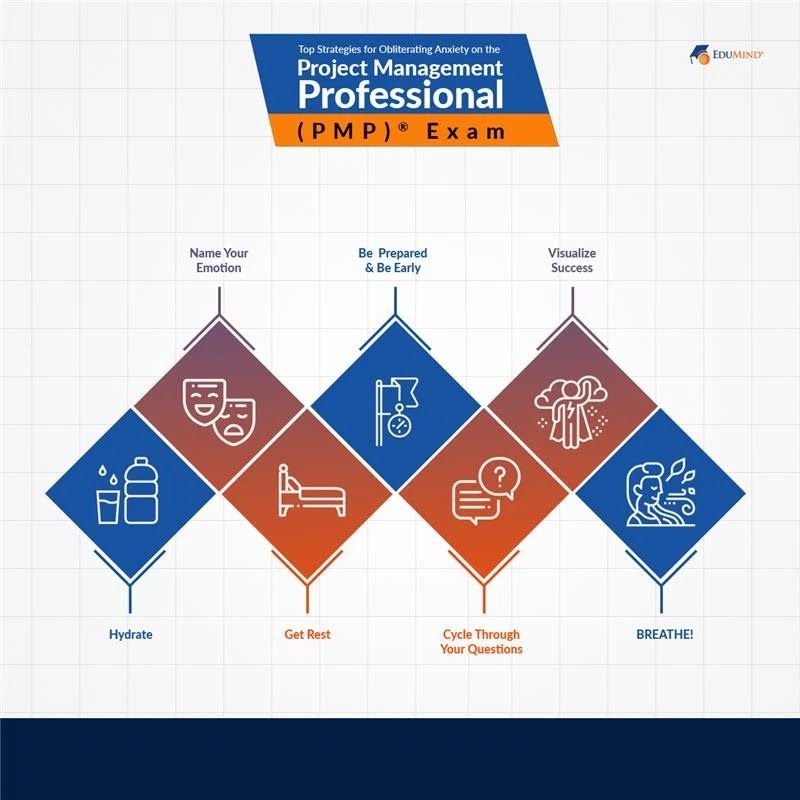
Top Strategies for Obliterating Anxiety on the Project Management Professional (PMP) Exam

Image
The vast majority of people have some form of exam anxiety, and the intensity can range from just a little nervous to paralyzing or crippling impacts. Exam anxiety is even more common for an exam as challenging as the Project Management Professional (PMP). If you have considered pursuing this globally recognized credential, you have likely heard that the 200-question exam is not for the faint of heart. In addition to the difficulty, most folks spend a lot of money and time preparing for the exam, and some also face the additional pressure that their credential is a job requirement. This can significantly add to the pressure you may feel going into the exam, which, in turn, increases the probability of experiencing exam anxiety.  Table of Contents 1. What is exam anxiety? 2. How can I reduce my anxiety? What is exam anxiety?  Unfortunately, the same beautiful brain that is going to en...

Why You Need Your Project Management Professional (PMP) Credential?

Regardless of your industry, if you are a project manager, you more than likely have considered pursuing your PMP credential. As the most globally recognized project management certification, a PMP is undoubtedly a demonstration of your expertise. Still, the road to get those three little letters after your name may have you considering whether or not it is worth it.  To qualify to take the PMP exam, project managers are required to document both their project management experience as well as their relevant education. If your application is approved, the final step is to pass a notoriously difficult 200-question exam. To best be prepared for success, candidates typically pursue exam preparation classes, invest in multiple study books, and devote time to studying and taking practice tests. So, is it worth it?  If you are serious about your career as a project manager, then the answer is most likely "yes!" There are several benefits to earning and maintaining your PMP that shou...

What are the PMP Certification Requirements?

One of the most effective ways to demonstrate credibility in almost any career field is to obtain a professional certification. The field of project management is no exception and the Project Management Professional (PMP) credential does just that. Around the world, project managers with the PMP designation are recognized and sought-out for their high level of project management knowledge, skills, and abilities.  The requirements for earning the PMP represent a competency framework that encompasses an applicant's past, present, and future. The Project Management Institute (PMI) requires a combination of general knowledge and experience, joined with specialized knowledge and experience, all obtained in the last eight years. PMI understands that at the point where theory meets practice is the moment that the highest levels of competence and readiness occur. To that end, PMI requires applicants to demonstrate the following:  A four-year degree (bachelor's or the global equivalent...

Can I Self-Study for the Project Management Professional (PMP) Exam?

The Project Management Professional (PMP) exam is considered to be one of the most challenging certification exams. With the proper preparation, organization, and dedication, however, you can pass this exam and reap the benefits that come with holding a globally recognized certification.  Table of Contents 1. Why is the exam so difficult? 2. The self-study option of preparation 3. Study plan pace 4. Source of the material 5. Alignment with the current version of the exam Why is the exam so difficult?  Three facets contribute to the difficulty of the PMP exam:  An extensive volume of information  Vocabulary that may be unfamiliar   Challenging exam questions and a lengthy exam  These three facets have a direct impact on the need for proper preparation to be suc...

Top 7 Tips for Project Management Professional (PMP) Exam Preparation

Image
The Project Management Professional (PMP) exam is undoubtedly a very challenging test. However, there are some proven tips and tactics that can significantly increase the probability of a successful outcome. Having taught, mentored, and advised hundreds of project managers on preparing for the exam, I have found that these seven tips build the most robust foundation.  Table of Contents 1. Do not underestimate the difficulty 2. Use reputable resources 3. Exercise caution with advice that is given 4. Set the date 5. Practice, practice, practice 6. Speak the concepts 7. Leverage your experience Tip 1: Do not underestimate the difficulty   There are two common misconceptions related to the difficulty of the exam: if you're good at taking tests, the PMP will be easy, and if you're an experienced project manager, you will have no problem passing. These are ...

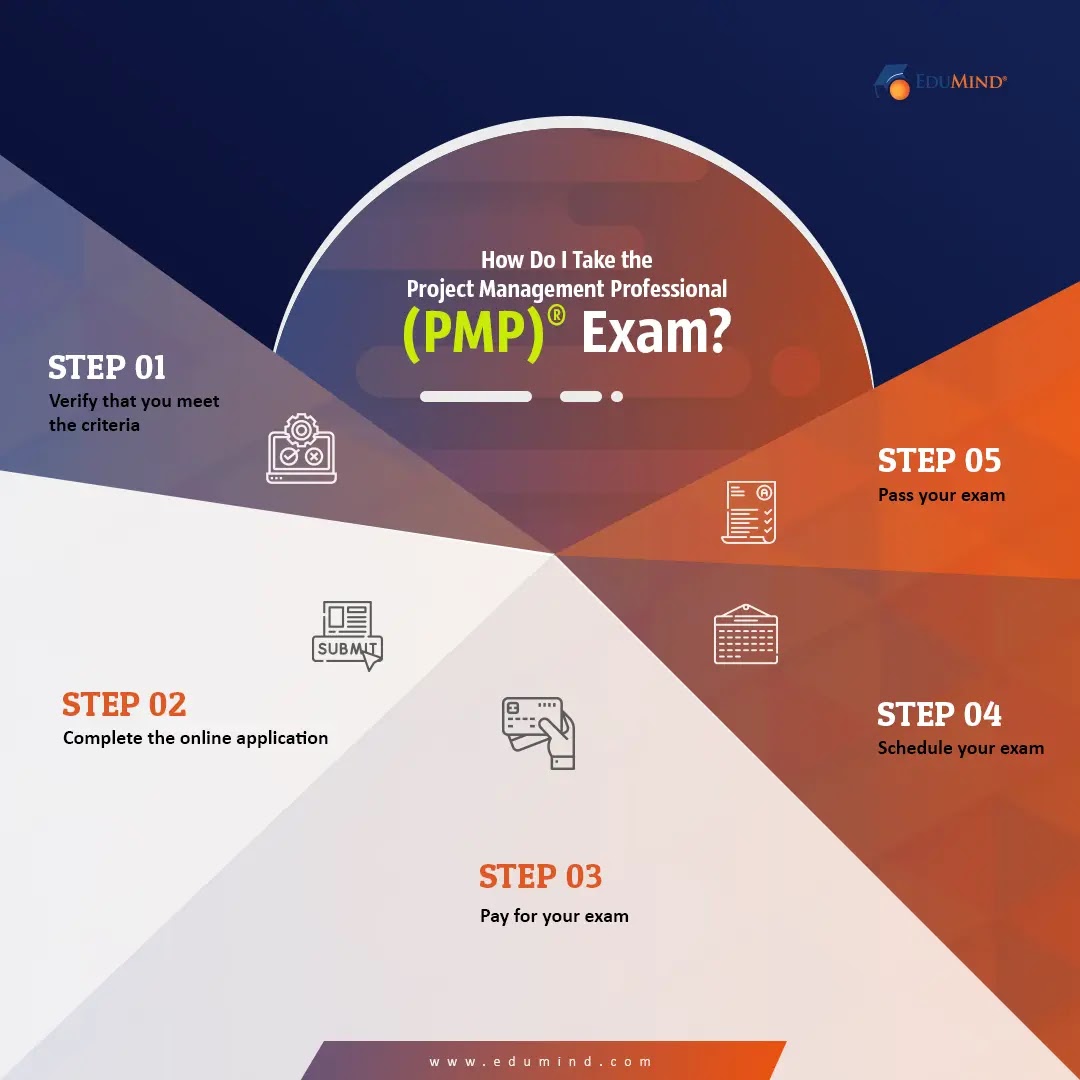
How Do I Take the Project Management Professional (PMP) Exam?

Image
The Project Management Professional (PMP) credential is one of the most globally recognized credentials for project managers across all industries and organization types. In today's competitive landscape, having the coveted PMP credential increases your job and salary opportunities. There are multiple steps required to earn your credential. Being organized and prepared can make this process easier and less stressful!  Table of Contents 1. Verify that you meet the criteria 2. Complete the online application 3. Pay for your exam 4. Schedule your exam 5. Pass your exam Step 1: Verify that you meet the criteria  To qualify for the PMP credential, you will need to meet the defined criteria. If you have a four-year degree or higher, you are required to have 36 months leading projects and 35 hours of project management education (or the Certified Associate in Project Management [CAPM])....